
Helping people build better financial habits isn’t just good UX, it’s a business imperative. For banks, fintechs, and investment platforms, long-term value is often tied to long-term behaviour - saving regularly, staying engaged, making better choices.
For many, money is a source of stress, and not something they actively want to engage with. When confidence is low and the stakes feel high, it’s easier to avoid the topic altogether. That’s why the real challenge isn’t just building smart financial products, but creating ones that feel supportive, simple, and help people build better habits over time.
At Hi Mum!, we help financial services brands build digital products that don’t just function, they genuinely support the people using them. Whether we’re designing for everyday savers, first-time investors or self-employed mortgage hunters, our goal is to shape experiences that help people take action, stay engaged, and feel more in control of their money.
You can’t design good financial behaviours until you understand the blockers. Is it lack of knowledge, or fear of making the wrong decision? Is it friction in the journey, or lack of motivation to begin with?
That’s why our work always starts with research, speaking directly to the people you're trying to support. In many cases, what appears to be a product issue is actually an emotional one: feeling judged, overwhelmed, or uncertain. These insights are critical for shaping tools that meet people where they are, not where we wish they were.
When we worked with Bestinvest, we redesigned their investment journey to balance long-standing customer expectations with the needs of a new, digital-first audience. For many users, confidence, not knowledge, was the barrier. Our work focused on helping people feel in control of their choices, not just informed.
The hardest part of building any habit is getting started and sticking with it, which is especially true when money is involved. Designing for behaviour change means reducing the cognitive load, removing friction, and giving people a sense of immediate progress.
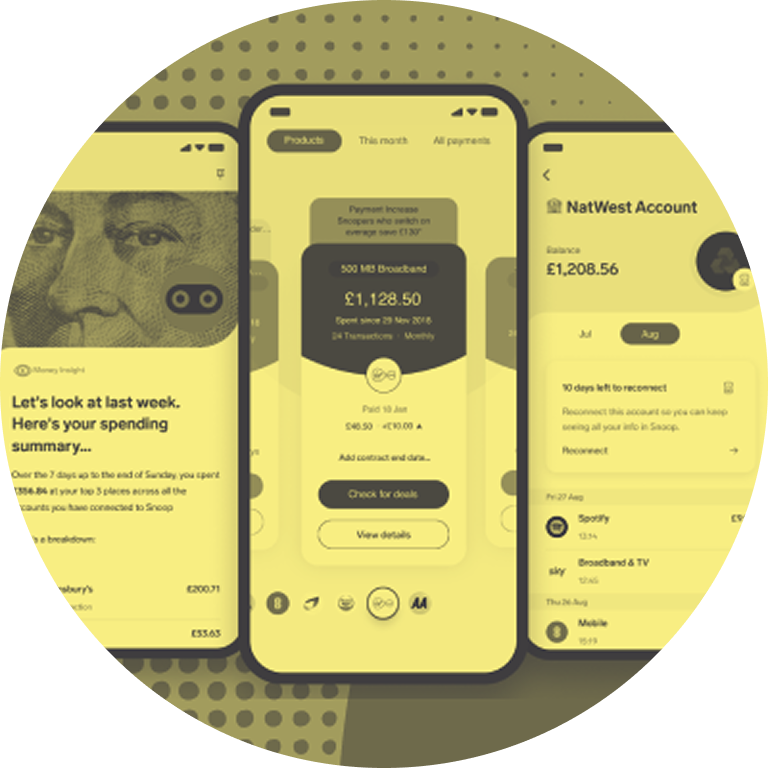
We’ve achieved this across a range of products, from retail investing platforms to money management tools such as Snoop.
For one of the UK’s leading banks, we built flexible savings goals that adapted to users’ behaviours, allowing them to personalise targets and adjust plans dynamically. What made it effective wasn’t just the interface, it was the sense of permission it gave users to start somewhere. Simple language shifts, gentle nudges, and positive reinforcement helped increase motivation, reduce the fear of “getting it wrong,” and create momentum toward longer-term goals like home ownership or retirement.
Once a user is in, keeping them engaged comes down to relevance. That’s where smart use of data can drive better outcomes.
We design financial products that adapt to a user’s situation, habits, and preferences, using personalisation to create timely nudges, useful insights, and reminders that feel helpful, not intrusive.
One of the most impactful examples is our work on Snoop, where we designed features that deliver meaningful, personalised insights based on users’ spending behaviour. Instead of generic nudges, Snoop provides context-aware prompts that users can act on immediately, whether surfacing a forgotten subscription or encouraging them to switch providers. The product continually proves its value, helping users build better money habits without ever needing a crash course in finance or chasing engagement for its own sake.
For savings tools, we’ve found that even subtle personalisation, like changing the tone of reminders, letting users rename their goals, or shifting the time of prompts, can significantly impact uptake and retention. Behaviour change doesn’t require flashy interventions, it requires thoughtful design that feels human.
We don’t make assumptions about what will work, we test it. Every idea, journey and message goes through rounds of prototyping and real-user feedback. Most importantly, we embed your product, design and tech teams in the process from day one, so what we build together isn’t just clever, it’s compliant, feasible and genuinely useful.
We bring this same process to every project, whether it’s a feature-rich app or a focused MVP. Our goal is to validate quickly, iterate with purpose, and build something that not only works but helps users build better habits over time.
The best financial products don’t just deliver features, they change behaviours, gently, consistently, and in ways that feel natural. That’s the kind of work we do.
If you're trying to increase engagement, improve retention, or help your users make smarter decisions over time, we’d love to help you shape a product that works with them not against them.
Let’s build something that lasts.